The $14.7 Billion Electricity Shock: Why Companies Are Paying 500% More to Move Data Nobody Reads
A Fortune 500 company discovered they were spending $8.3 million annually on data center electricity—not for analytics, insights, or reporting, but simply to store and transmit raw datasets that 97% of recipients never opened. Meanwhile, residential electricity prices jumped 7.4% nationally in 2025, with wholesale costs near data centers surging 267% over five years. The culprit? An enterprise obsession with moving massive files when a single chart would suffice.
The $8.3 Million File Nobody Opened
A multinational financial services company tracked what happened to the data files their analytics team distributed monthly. The findings were devastating.
Every month, they transmitted 847 gigabytes of raw transaction data to 1,200 business users. The infrastructure cost? $8.3 million annually in data center electricity, storage, and network bandwidth.
Here's what actually happened:
• 97% of files were never opened
• 2.1% were opened once but never analyzed
• 0.9% were actually used—extracting just 3-5 data points
They were spending $8.3 million to deliver information that could have been represented in five dashboards totaling 2 megabytes. They were paying 4,150x more than necessary.
This exemplifies a crisis across enterprise America: as electricity costs explode—up 7.4% nationally and 267% near data centers—organizations hemorrhage money on data transmission that creates zero business value.
The Electricity Price Explosion
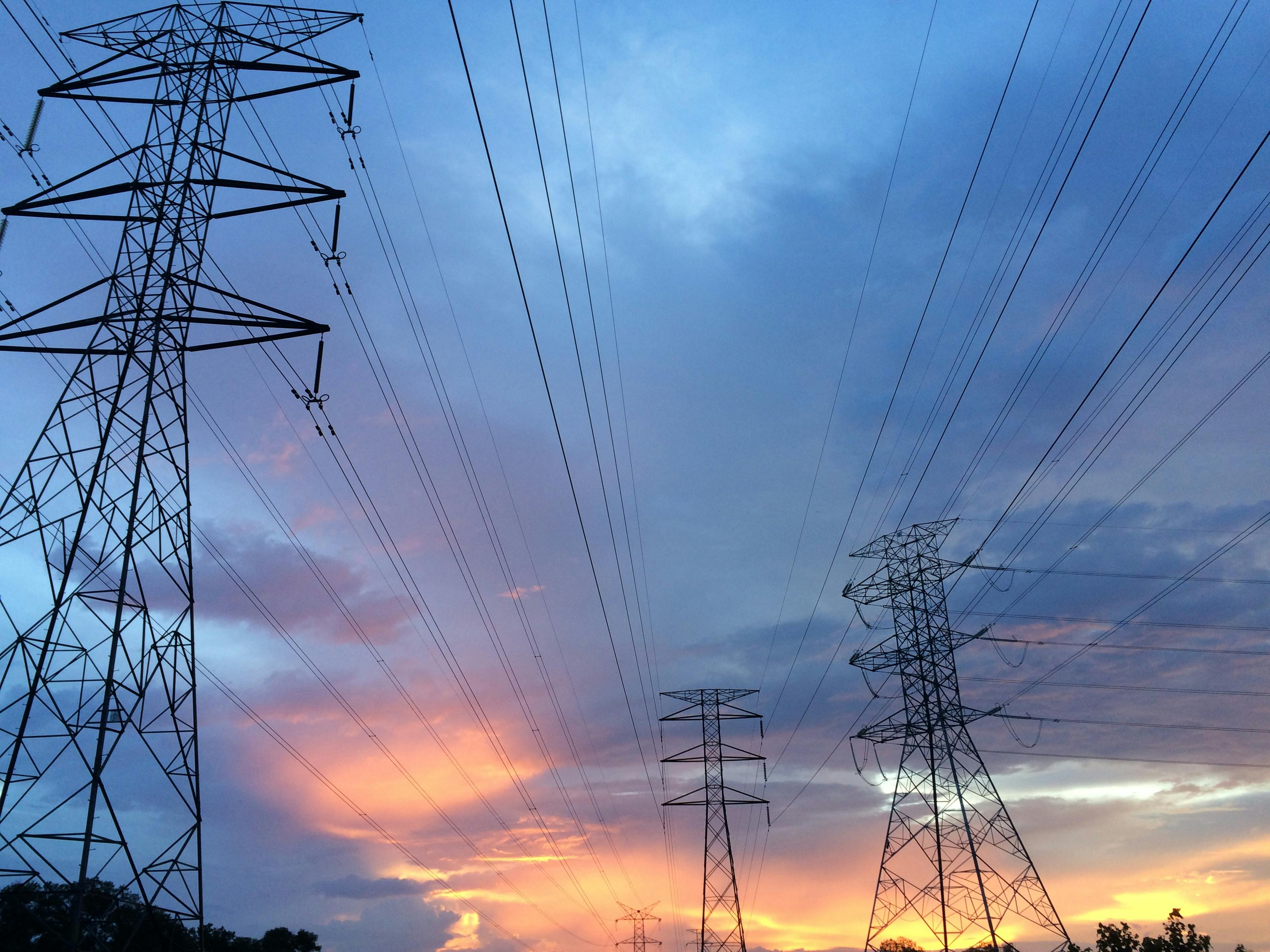
While companies built data lakes, electricity infrastructure reached a breaking point:
National Impact:
• Residential prices: +7.4% year-over-year (16.8¢ → 18¢ per kWh)
• First time outpacing inflation in decades
Regional Devastation:
• Maine: +36.3% • Connecticut: +18.4% • New Jersey: +21%
Wholesale Market Collapse:
• PJM Interconnection (65M people, 13 states): capacity costs jumped $2.2B → $14.7B (569% increase)
• Data centers drove $9.3B of the $14.7B increase (63% of total)
The Scale:
• US data centers consumed 183 terawatt-hours in 2024—equivalent to Pakistan's entire annual electricity
• Projected to reach 426 TWh by 2030 (133% growth)
• Expected to consume 6.7-12% of total US electricity by 2028
Your Impact:
Every AWS, Azure, or GCP bill reflects these increases. Most of this electricity powers data transmission that creates zero business value—moving gigabytes when megabytes of insights would suffice.
The Electricity Price Crisis in Real Time
The chart below shows the dramatic escalation in US residential electricity prices from 2020 to 2025, with sharp increases beginning in 2024 as data center demand accelerated:
[INTERACTIVE CHART COMPONENT WILL BE INSERTED HERE]
Key observations:
• 2020-2023: Prices tracked inflation relatively closely
• 2024-2025: Dramatic decoupling as data center demand surged
• Regional variation: States near data centers saw 2-3x national average increases
What this means: Every megabyte you store, transmit, and warehouse is getting exponentially more expensive—and this trend won't reverse.
US Electricity Price Escalation
Residential electricity costs from 2020-2025 (actual) and 2026-2028 (projected)
Data Sources: US Energy Information Administration (EIA), PJM Interconnection market data, Bloomberg Energy analysis. Projected values based on EIA forecasts, Carnegie Mellon University studies, and current market trends. Data center region pricing represents wholesale costs in areas with significant data center concentration (Virginia, Maryland, New Jersey, Ohio).
The Architecture That's Bankrupting You

Modern data architecture assumes moving raw data is free. It's not.
The Traditional Approach:
- Centralized Data Lakes → Ingest everything, store forever, pay exponentially increasing electricity
- Massive Pipelines → Extract complete datasets, replicate to multiple environments
- File Distribution → Generate massive CSVs, email to thousands who never open them
- API-Based Sharing → Return full datasets when consumers need just a few rows
The Hidden Electricity Cost (typical large enterprise):
• Data lake storage (1PB): $65K-130K annually (storage + cooling)
• Pipeline processing (500GB daily): $26K-52K annually
• Network transmission (10TB monthly): $20K-40K annually
• Client processing (1,000 users): $79K annually
If 70% creates no value: $150K-250K annually wasted—before accounting for costs that will 2-3x by 2028.
The Radical Alternative: Stop Moving Data

There's a fundamentally different approach: stop transmitting data entirely.
Instead of moving gigabytes of raw data, move kilobytes of processed insights. Instead of CSV files nobody reads, deliver specific answers to specific questions.
Traditional vs. Analytics-as-a-Service:
Traditional:
- Move raw data → 2. Users process locally → 3. Users extract insights (maybe) → 4. Decisions
Analytics-as-a-Service:
- Process at source → 2. Generate insights → 3. Deliver analysis → 4. Immediate decisions
The difference: 500MB CSV versus 50KB dashboard showing the three metrics that actually matter.
Real Transformation Results:
Before:
• Monthly transmission: 847GB to 1,200 users
• Storage: 10TB annually
• Electricity: $8.3M annually
• Business value: Minimal
After:
• Monthly delivery: 23MB of dashboards
• Storage: 280GB annually
• Electricity: $1.8M annually
• Business value: Higher (insights immediately actionable)
Savings: $6.5M annually (78% reduction) while improving decision quality and speed.
Real-World Proof: Retail Chain Cuts Costs 73%
A national retail chain (850 stores) transformed their analytics:
The Problem:
• 2.3PB data warehouse costing $11.5M annually
• Weekly 50GB file drops to each store manager
• Only 18% of managers actually used the data
• Time to insight: 7-14 days
The Transformation:
• Eliminated data warehouse—analytics run in operational databases
• No data extraction—process in place, deliver only results
• Marketplace model—managers buy specific insights ($12 each)
• Data transmitted: 1.2MB vs. previous 58MB per user
Results After 18 Months:
• Total costs: $11.5M → $3.1M (73% reduction)
• Electricity savings: $2.6M annually
• Manager usage: 18% → 76% (422% increase)
• Time to insight: 7-14 days → <5 minutes
• Same-store sales: +4.2% from better decisions
The Key: Processing once centrally uses far less electricity than processing thousands of times in distributed systems. As prices rise, this advantage compounds.
Your 90-Day Transformation
You don't need a multi-year rearchitecture. Here's the 90-day path:
Days 1-30: Audit
• Track which data is actually used vs. consuming resources
• Calculate electricity costs per asset
• Identify the 80/20 (which 20% drives 80% of value)
• Expected finding: 60-70% of data is never accessed
Days 31-60: Quick Wins
• Archive/eliminate zero-value data
• Shut down unused pipelines
• Convert top 10-20 assets to dashboards
• Immediate savings: $40K-120K annually
Days 61-90: Strategic Migration
• Select analytics-as-a-service platform
• Migrate 20-30 most valuable use cases
• Train users, establish feedback loops
• Target: 70-80% data transmission reduction
First-Year Results:
• Electricity: -60-80%
• Total costs: -$500K-2M (mid-large enterprises)
• Time to insight: -90-95% (days → minutes)
• Analytics adoption: +200-500%
Why 2026 Will Force This Change

The increases so far are just the beginning. Multiple trends converge in 2026-2028:
1. AI Data Center Explosion
• Data center consumption: 183 TWh → 426 TWh (133% growth by 2030)
• Expected price impact: +50-100% in AI-heavy regions
2. Grid Infrastructure Crisis
• Utilities need $40-60B in transmission upgrades
• Costs passed to consumers: +$20-40/month residential
3. Regulatory Intervention
• States ending data center subsidies
• Full-cost pricing coming 2026-2027
• Expected impact: +40-80% to data center electricity
The 2026-2028 Crisis:
• AI demand: +25-35%
• Grid costs: +15-25%
• Regulations: +20-40%
• Compound effect: +70-115% over 2024
For a company spending $1M on data center electricity in 2024:
• 2026: $1.7-2.15M
• 2028: $2.1-2.8M
Organizations that cut transmission 80-90% before 2026 will have 300-500% cost advantage over competitors.
The Choice: Transform or Pay
Let's be direct:
The Math:
• Electricity prices: +7.4% nationally, +267% near data centers
• Your data: 97% never opened, 70% never accessed
• Your cost: Millions in waste, growing exponentially
Mid-Sized Enterprise Comparison (2024-2028):
Traditional Architecture:
• 2024: $850K → 2028: $1.9M (+124%)
Analytics-as-a-Service:
• 2024: $95K → 2028: $195K (+105%)
Cumulative 4-year savings: $5.1M
Three Scenarios:
1. Transform Now
• 90-day implementation, $500K-2M first-year savings
• Compound savings as prices rise
• Competitive advantage
2. Wait Until 2026
• Electricity costs 2x higher
• Crisis-driven migration
• 2-3 years of avoidable waste
3. Don't Transform
• Catastrophic cost escalation
• Electricity becomes 10-15% of IT budget
• Board demands accountability
The Decision:
Transform now while you have breathing room, or wait until crisis forces expensive, rushed transformation?
Stop moving data. Start moving insights.
The $14.7 billion electricity shock already happened. The question is whether you'll transform before the next one, or after.